Authors
Partner, Regulatory, Indigenous and Environmental, Toronto
Associate, Disputes, Vancouver
Associate, Disputes, Toronto
Associate, Disputes, Toronto
Articling Student, Toronto
Key Takeaways
- Recent cases in Canada, such as Cowichan and Wolastoqey, are impacting the relationship between Aboriginal title and fee simple ownership interests on unceded lands.
- Pursuant to Cowichan, Aboriginal title may be established over lands currently held in fee simple, but does not nullify private ownership.
- Aboriginal title is not subordinate to fee simple rights; it is a senior, prior right. Both rights may coexist, yet their exercise requires reconciliation.
Recent Canadian jurisprudence is redefining the intersection between Aboriginal title and private property rights, raising both legal and practical questions about land ownership on unceded territory in Canada. The recent Cowichan case, in particular, has attracted a great deal of media attention.
In the near term, Canadian governments and Aboriginal title holders will have to attempt to reconcile these interests through negotiation. In the absence of a negotiated resolution, courts will be asked to determine the appropriate remedy when privately owned lands are held to be subject to Aboriginal title.
Wolastoqey Nations v. New Brunswick and Canada et al
As we previously reported, in 2021, six Wolastoqey Nations filed a claim seeking a declaration of Aboriginal title over more than half of the land in New Brunswick. The claim was brought against the Province of New Brunswick, the Attorney General of Canada and several private companies and entities (the Industrial Defendants). The land at issue in Wolastoqey encompasses 283,204 separate parcels. It includes land privately owned by the Industrial Defendants and other private and corporate entities.
In 2024, the Industrial Defendants and New Brunswick brought separate applications to strike the Wolastoqey Nations’ pleadings. The New Brunswick Court of King’s Bench allowed the claim for declaratory relief against the provincial and federal governments to proceed, but struck the pleadings against the Industrial Defendants. As we previously wrote, the lack of legal relationship among the parties was the key issue for the Court. While a declaration of Aboriginal title could affect non-Crown and private interests, the legal declaration itself was only available against the Crown. As a result, any consequent relief must come from the Crown. Aboriginal rights under the Constitution are held against the Crown, not private parties. As there was no legal relationship between the Industrial Defendants and the Wolastoqey Nations, the Court concluded that the declarations and consequential relief sought directly against the Industrial Defendants had no reasonable prospect of success and struck these claims.
Even though the claims against the Industrial Defendants were struck, the land held by private fee simple titleholders, including lands owned by the Industrial Defendants, remained part of the claim and could be subject to a declaration of Aboriginal title. Accordingly, the Industrial Defendants appealed the decision. Their appeal was heard on October 21, 2025, and judgment is currently under reserve. It is worth noting that the Wolastoqey Nation has indicated they are not seeking relief as against any private homeowners.
Cowichan Tribes v. Canada (Attorney General)
Similar issues have also been considered in British Columbia. On August 7, 2025, the Supreme Court of British Columbia issued its decision in Cowichan Tribes v. Canada (Attorney General). As we previously reported, this landmark decision marked the first time in Canadian history that Aboriginal title has been established over lands that include fee simple ownership interests.
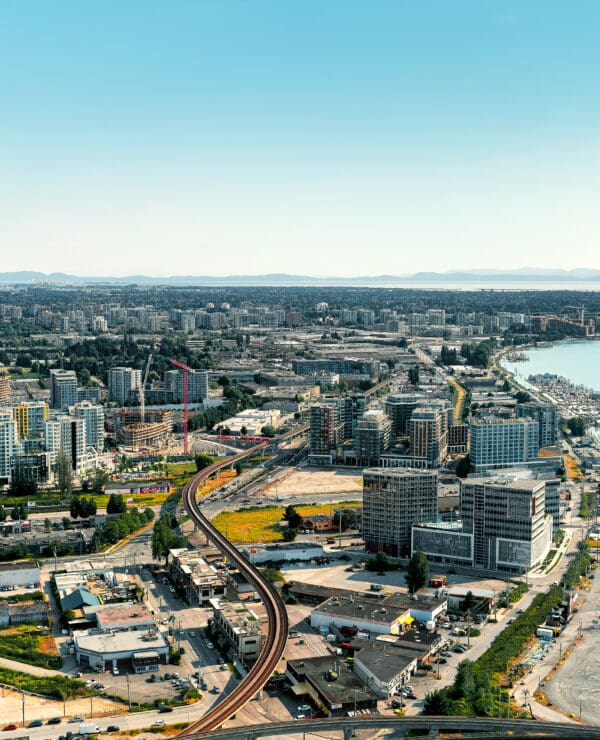
In this case, the Cowichan Nation filed an action seeking, among other things, a declaration of Aboriginal title to their traditional village of Tl’uqtinus located on the south shore of Lulu Island in Richmond, British Columbia. The claim area was on lands currently owned by Canada, the Vancouver Fraser Port Authority, the City of Richmond and private parties. The Cowichan Nation also sought a declaration that the fee simple titles and interests owned by Canada and Richmond were defective and invalid. They did not seek a declaration of invalidity regarding fee simple title held by private owners.
After a 513-day trial that spanned nearly four years, the Court determined that the Cowichan Nation held Aboriginal title to a portion of the claim area. Furthermore, the Court held that the Cowichan Nation’s Aboriginal title had not been extinguished by legislative action because the province lacked the jurisdiction to do so. Crown grants in the Cowichan title lands were found to be an unjustifiable infringement of their Aboriginal title. The Crown had no statutory or constitutional authority to grant land within the Cowichan title lands to anyone because the lands had been appropriated for the Cowichan. Finally, the Court determined that the B.C. Land Title Act did not cure any defects in the Crown grants. The Court issued a declaration that the fee simple title and interests in the lands owned by Canada and Richmond were defective and invalid. However, the Court suspended this declaration for 18 months to allow the parties time to make the necessary arrangements.
All parties have appealed the decision in Cowichan. This includes the Cowichan Nation in respect of the Court’s decision to recognize Aboriginal title over only a portion of the total land area claimed. On November 6, 2025, Montrose Properties, a private landowner affected by the decision, announced that they will be applying to be named a party to the litigation and have the Court’s decision reopened.
Other recent Canadian cases
Shortly after Cowichan was released, the Supreme Court of British Columbia in The Council of the Haida Nation v. British Columbia issued a declaration of Aboriginal title to the terrestrial areas of Haida Gwaii. This is the first time that a court has granted a declaration of Aboriginal title on consent of the Crown parties. The Aboriginal title of the Haida Nation had already been recognized by statute through the Haida Nation Recognition Amendment Act, 2024 and will be recognized by Canada in similar legislation. Nonetheless, the Court concluded that the declarations still have practical utility in that they recognize and promote reconciliation, and can inform the issues remaining to be decided in the litigation seeking damages for infringement or interference with Aboriginal title. Additional detail on the Haida Nation case is available in our Indigenous Law Blog and our Osler Update.
On October 24, 2025, the Kitigan Zibi Anishinābeg (Kitigan) filed a land title claim in the Superior Court of Québec against the Province of Québec and Canada over a large area of land in Western Québec. Like the Wolasteqey and Cowichan Nations, the Kitigan have stated that they do not intend their claim to affect private ownership interests.
On November 21, 2025, a proposed class action was filed in the Supreme Court of British Columbia against British Columbia and Canada on behalf of certain fee simple title holders in British Columbia impacted by Cowichan. The plaintiff alleges, among other things, that the defendants made false and misleading representations about the strength of registered title in British Columbia, which were relied on by class members to their detriment. The action has not yet been certified as a class proceeding.
Implications for property rights going forward
The legal and practical implications of these decisions raise important questions for governments, corporations, project developers and private citizens about the extent and validity of their property rights on unceded lands that are or could be subject to Aboriginal title claims. As these cases make their way through appellate courts or result in negotiated resolution, significant uncertainty will remain for those with competing interests or overlapping claims. Nevertheless, a few important concepts can be extracted from the jurisprudence to date.
First, the courts in Wolasteqey and Cowichan noted that neither Aboriginal title nor fee simple title is absolute. Aboriginal title is subject to a number of constraints, including that it is inalienable other than to the Crown. It is held communally. It cannot be encumbered or used in ways that will prohibit future generations from using it.
Likewise, there are limits to fee simple ownership. These include public policy restraints, common law restrictions such as the law of nuisance and statutory restraints such as family disinheritance and matrimonial property legislation. Other limits include environmental protection statutes, planning and zoning legislation, expropriation by the state, aeronautics legislation and the right of the Crown to minerals.
Find out more about our Regulatory, Indigenous and Environmental Group.
Learn moreSecond, the decision in Cowichan explicitly stated that Aboriginal title is not inferior to fee simple title rights. Rather, because of its sui generis nature and the fact that it predates colonization, Aboriginal title is a prior and senior right that burdens the land upon which fee simple interests have been granted. These rights can coexist, but the exercise of those rights will need to be reconciled.
Third, as discussed at length in Wolasteqey and Cowichan, negotiation will be essential to reconcile competing interests. Once the Aboriginal rights dispute is factually and legally determined, typically a negotiation and reconciliation phase will be triggered. Here, it is up to the Crown to reconcile competing interests through negotiation with Aboriginal groups. As part of this reconciliation process, the Crown will need to take into consideration affected fee simple title holders. This may be achieved through a variety of mechanisms. At one end of the spectrum is compensation to the Aboriginal title holder. At the other end is the introduction of expropriation legislation with reasonable compensation to fee simple title holders.
Looking forward to 2026
Courts have indicated that reconciliation of Aboriginal title and private property rights is best achieved through Crown-First Nation negotiations. In the absence of a negotiated resolution, First Nations with Aboriginal title would need to bring a remedial application to court. In the near term, we will be watching for Crown-initiated negotiations and how any agreements treat private property interests.