Authors
Partner, Energy and Construction, Calgary
Partner, Corporate, Calgary
Partner, Tax, Calgary
Calgary Managing Partner, Calgary
Associate, Corporate, Calgary
Associate, Corporate, Calgary
Associate, Tax, Calgary
Key Takeaways
- The MOU signals a shift in Canada’s investment climate for energy infrastructure, aiming to enhance collaboration and competitiveness.
- It commits to a potential pipeline to serve Asian markets, contingent on the successful operation of a major carbon capture and storage facility.
- The agreement commits to net-zero emissions by 2050 and focuses on regulatory streamlining to attract investments.
The Government of Canada and the Government of Alberta have delivered an unequivocal signal that the regulatory and political friction between these two levels of government that has long undermined investment in Canadian major energy infrastructure projects may have finally reached a resolution. On November 27, 2025, Alberta Premier Danielle Smith and Prime Minister Mark Carney announced the “Memorandum of Understanding between the Government of Canada and the Government of Alberta: agreement to strengthen energy collaboration and build a stronger, more competitive and more sustainable economy” (the MOU).[1]
Among several other strategic initiatives, the MOU commits to greenlighting an oil pipeline that may serve Asian markets (the potential pipeline). The potential pipeline is contingent on commercial operation of the world’s largest carbon capture and storage (CCS) facility led by the Pathways Alliance (five of Canada’s largest oil sands producers) (Pathways Project).
In our view, the MOU represents historic alignment between the two levels of government, addresses many of the concerns publicly articulated by industry and should dramatically enhance the attractiveness of Canada as a compelling destination for energy capital.
The potential pipeline and Pathways Project are globally significant projects
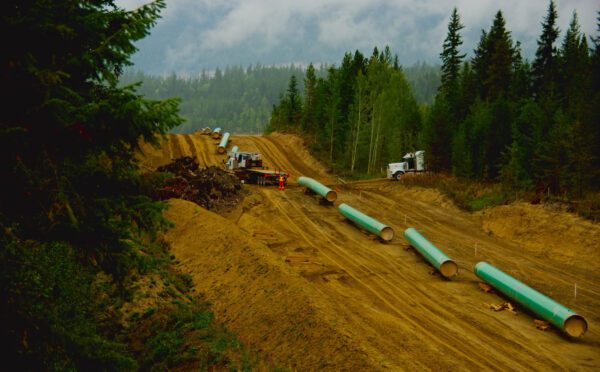
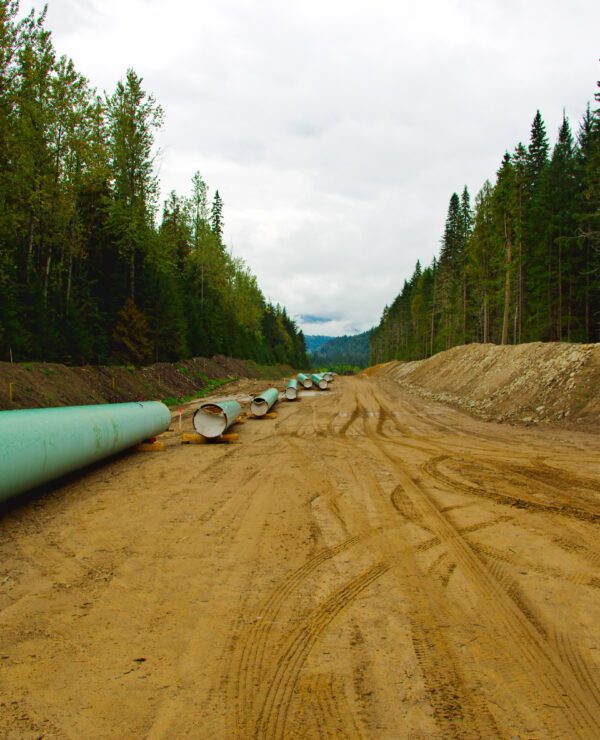
The potential pipeline is contingent on the advancement of the Pathways Project, balancing needs for energy security and diversification with Canada’s commitment as a climate leader. Both projects are significant. The Pathways Project is expected to reduce net carbon dioxide emissions by about 13.9 Mt CO2 by 2030, ramping up to annual reductions of 62 Mt CO2/y by 2050.[2] (There are currently only four large-scale CCS projects operating in the world.)[3] The potential pipeline is contemplated as carrying over one million barrels per day and to terminal at Canada’s west coast. Canada’s only major pipeline doing the same was the Trans Mountain Pipeline, including the recent Trans Mountain Expansion, which placed online 890,000 barrels per day of export capacity.[4]
Western Canadian crude oil export pipeline capacity, as of June 2025, is ~5.2 million barrels per day (with actual throughput of ~4.6 million barrels per day).[5] In 2024, Canada produced ~6 million barrels per day of oil.[6] Accordingly, relative to their domestic and international peers, each potential project would be significant in supplying low-emission crude oil and diversifying Canada’s trade optionality.
Strengthening the investment thesis in Canada: MOU details
The “grand bargain” reflected in the MOU is designed to catalyze investment from both domestic and foreign financial and strategic investors into Canadian oil and gas, renewable energy, artificial intelligence (AI) and power and electricity, while ensuring that the environmental and social governance (ESG) expectations of such investors and the broader public are fulfilled. High-level details follow.
Oil and gas
Canada will immediately suspend the Clean Electricity Regulations (the CER) in Alberta pending a new carbon pricing agreement and, upon completion of that agreement and other measures, place the CER in Alberta in abeyance. The CER was a key constraint for new natural gas–fired power generation in Alberta.
Canada will not implement the Oil and Gas Emissions Cap.
Canada will cooperate with Alberta and British Columbia to advance the potential pipeline, including agreeing that the potential pipeline can be referred to the Major Projects Office under the Building Canada Act (which would significantly de-risk it by streamlining federal approvals).
Canada may adjust the Oil Tanker Moratorium Act, which currently restricts the abilities for commercial-scale oil tankers to operate off the northwest coast; this change would allow a potential pipeline to service Asian markets.
Per Budget 2025, Canada committed to amendments to the Competition Act which walk back “greenwashing” provisions.
Renewables/CCS/carbon pricing
Alberta will commit to a competitive and long-term Technology Innovation and Emissions Reduction Regulation (TIER) system, including ramping up to a carbon price of $130/tonne of greenhouse gas for industrial emitters. The TIER system will be backed by financial mechanisms (like binding contracts for difference with offtakers) that will de-risk carbon pricing and benefit low-emissions projects and renewables investors who seek to price carbon into their project economics.
Canada will extend and support investment tax credits to reduce capital expenditure on energy transition projects, which complements Budget 2025’s proposal to have the Canada Growth Fund’s contributions to projects eligible for investment tax credits (a $15-billion strategic fund involved with the energy transition).
Canada’s commitments include extending the Carbon Capture, Utilization and Storage Investment Tax Credit (the CCUS ITC) to CCS projects that involve the use of captured carbon for enhanced oil recovery (EOR). This represents a significant broadening of the policy and scope of the CCUS ITC, which has expressly excluded EOR since its introduction in 2021, and it is a marked departure from CCUS tax credits offered in the United States.
AI
The MOU commits Alberta to constructing thousands of megawatts of AI computing power, with large portions dedicated to a sovereign cloud for Canada and its allies. On or before July 1, 2026, Alberta will implement a framework to incentivise large investments in AI.
Power/electricity
As previously stated, the MOU may ultimately result in the suspension of the CER’s application in Alberta and permit new natural gas power generation beyond 2035. This will have a significant impact on the expected generation make-up of Alberta’s grid, provide more flexibility for Alberta to address future grid reliability and electricity price risk and allow another source of non-intermittent generation to power Alberta’s and Canada’s data centre aspirations.
The MOU commits to the construction of large transmission interties between Alberta and the provinces of Saskatchewan and British Columbia to supply low-carbon power to oil, LNG, critical minerals, agriculture, data centres and CCS in western Canada.
To achieve net-zero greenhouse gas emissions by 2050, in addition to deploying CCS alongside natural gas generation, Canada and Alberta will work collaboratively to design policy that will enable nuclear infrastructure as another source of non-emitting power.
ESG
The MOU commits Alberta to net-zero greenhouse gas emissions by 2050.
A potential pipeline will include Alberta supporting Indigenous co-ownership and economic benefits as a necessary condition. The Alberta Indigenous Opportunities Corporation would help backstop investment into a potential pipeline.
Applicable to all sectors, Canada and Alberta will cooperate to streamline the regulatory approval process to be two years or, where feasible, less. The parties further agree to work collaboratively to develop domestic carbon capture supply chains and Canadian steel and pipe production supply chains to support the MOU’s initiatives.
Significant step to reducing regulatory and political risks
While there is much detail remaining to be fleshed out, the MOU represents a material step towards establishing regulatory certainty and de-risking investment in major energy projects in Canada. Driven by the policy objective of contributing to global energy security and rejuvenating Canadian economic growth, the MOU aspires to implement a framework through which governments and industry collaborate to achieve a balance between building major energy projects for national energy security and the ongoing imperative to reduce emissions.
Next steps
The MOU establishes several targets and deadlines to implement the objectives of the MOU, including
- by 1 April 2026:
- Alberta and Canada will conclude carbon and methane equivalency agreements.
- The Pathways Project members, Alberta and Canada will execute a trilateral MOU.
- Canada and Alberta will enter a cooperation agreement on impact assessments to provide regulatory certainty.
- by 1 July 2026:
- The process for Alberta to submit a pipeline application to the Major Projects Office will be established.
- by 1 January 2027:
- Alberta will release a nuclear power generation strategy.
Osler’s energy expertise
The Osler team has been involved in some of the most significant pipeline work in the country, including the Trans Mountain Expansion Project, hundreds of kilometres of expansion projects for major midstream companies, the Coastal GasLink Pipeline and its equity investors, the recent Taylor to Gordondale Project proposed by a subsidiary of Pembina Pipeline Corporation and many others.
Osler’s broad conventional, renewables and energy transition practice features market-leading expertise in structuring complex joint ventures, completing strategic mergers and acquisitions, undertaking high-profile regulatory proceedings and developing and project financing major infrastructure projects. Osler has recently represented several strategics across Canada’s most important energy transactions and arrangements, including Chevron Canada Limited on the sale of its interests in oil sands and shale gas projects to Canadian Natural Resources Limited for US$6.5 billion; M3-Brigade Acquisition III Corp. and Brigade Capital in the sale of their equity interests in Greenfire Resources to Waterous Energy; Canada Growth Fund in connection with its strategic partnership with Gibson Energy and Varme Energy; and Cedar LNG in its Cedar LNG Project, a landmark US$3.4-billion initiative. Osler has also advised on the most significant projects in the Canadian nuclear industry, including major nuclear fleet refurbishments from each of the owner’s and the contractor’s perspectives, government financing of nuclear projects, development of major undertakings for the permanent management of nuclear waste as well as R&D and laboratories. Osler’s top-ranked to power, utilities and electricity practice, recently represented Nova Scotia Power with respect to the construction of the proposed 345kv Wasoqonatl Transmission Line between Nova Scotia and New Brunswick.
Osler is widely recognized for having Canada’s leading practices aimed at the industries at the epicentre of AI, including Canada’s leading tech and emerging and high growth companies practice, as well as leading data, data centre and intellectual property practices.
Osler also has significant expertise in the Asia market, where new governmental and business relationships may come to fruition under the potential pipeline export supply chain. Osler combines market-leading M&A and foreign investment expertise with deep experience advising Asia-based enterprises.
[1] “Memorandum of Understanding between the Government of Canada and the Government of Alberta : agreement to strengthen energy collaboration and build a stronger, more competitive, and more sustainable economy.”
[2] “Oil Sands CCUS: Pathways Alliance,” Natural Resources Canada. The annual capture rate the project expects to reach by 2030 is up to 4.2 Mt CO2/y.
[3] “Carbon Capture and Storage (CCS),” Pathways Alliance. The other major CCS projects are Alberta’s Quest CCS facility (online since 2015), Norway’s Northern Lights project (completed 2025), the Netherlands’ Porthos (scheduled for 2026) and the United Kingdom’s Northern Endurance Partnership (NEP) (scheduled for 2028).
[4] “Market Snapshot: Trans Mountain Expansion eases pipeline constraints and increases exports to overseas markets,” Canadian Energy Regulator.
[5] “Market Snapshot: Trans Mountain Expansion eases pipeline constraints and increases exports to overseas markets,” Canadian Energy Regulator. Canada’s key pipelines are the Trans Mountain, Keystone, Enbridge Mainline and the lower-capacity Express, Aurora and Milk River pipelines.
[6] Oil & Natural Gas 101|CAPP. For 2024, oil sands produced 3.5 million barrels per day (MMb/d), or about 58% of Canada’s total production, with the following breakdowns: conventional (non-oil sands): 1.5 MMb/d, or about 17% of total production; offshore: 0.2 MMb/d, or about 4% of total production; NGLs (natural gas liquids): 0.7 MMb/d, or about 12% of production; and condensates and pentanes: 0.6 MMb/d, or about 9% of production.